
Spain’s World Cup 2026 Victory: Key Moments That Defined the Tournament
The 2026 World Cup came to a close with Spain lifting the trophy for the second time in their history, after a 1-0 victory over Argentina in the final, courtesy of Ferran Torres's winning goal in the 106th minute. This triumph was not the product of individual brilliance alone but the result of a clear playing system, excellent understanding between the players, and an ability to control the game throughout the tournament. Spain did not just bring the trophy home; they also set a new standard for modern international football.
From the group stages to the final, Spain showcased a perfect balance between attack and defence. They controlled possession well, passed with rhythm and purpose, and could accelerate the game whenever space opened up. At the same time, they never neglected their defensive organisation. Every player had a clear role when possession was lost, making it difficult for opponents to create clear-cut chances, even against world-class attacking talents.
Spain's success also reflects long-term planning. Many of their players are still young, and several are familiar with each other from playing at the same clubs or through youth systems with similar footballing philosophies. This understanding allowed them to move without waiting for instructions, knowing exactly where to position themselves when a teammate received the ball, and to transition play naturally. The team functioned as a cohesive unit rather than a collection of individual stars.
For fans who followed every match of the World Cup, this tournament was also filled with game-changing moments, unexpected results, and events that significantly impacted betting patterns, whether it was late goals, extra time drama, or tactical shifts during matches. Those who enjoy analysing the game could enhance their experience through V9Bet, which offers both pre-match and live betting, with a wide range of markets including match winner, total goals, first goalscorer, anytime goalscorer, and odds that update in real-time.
This article looks back at why Spain were worthy champions of the 2026 World Cup, which moments defined the competition, and which players were pivotal to this historic success.
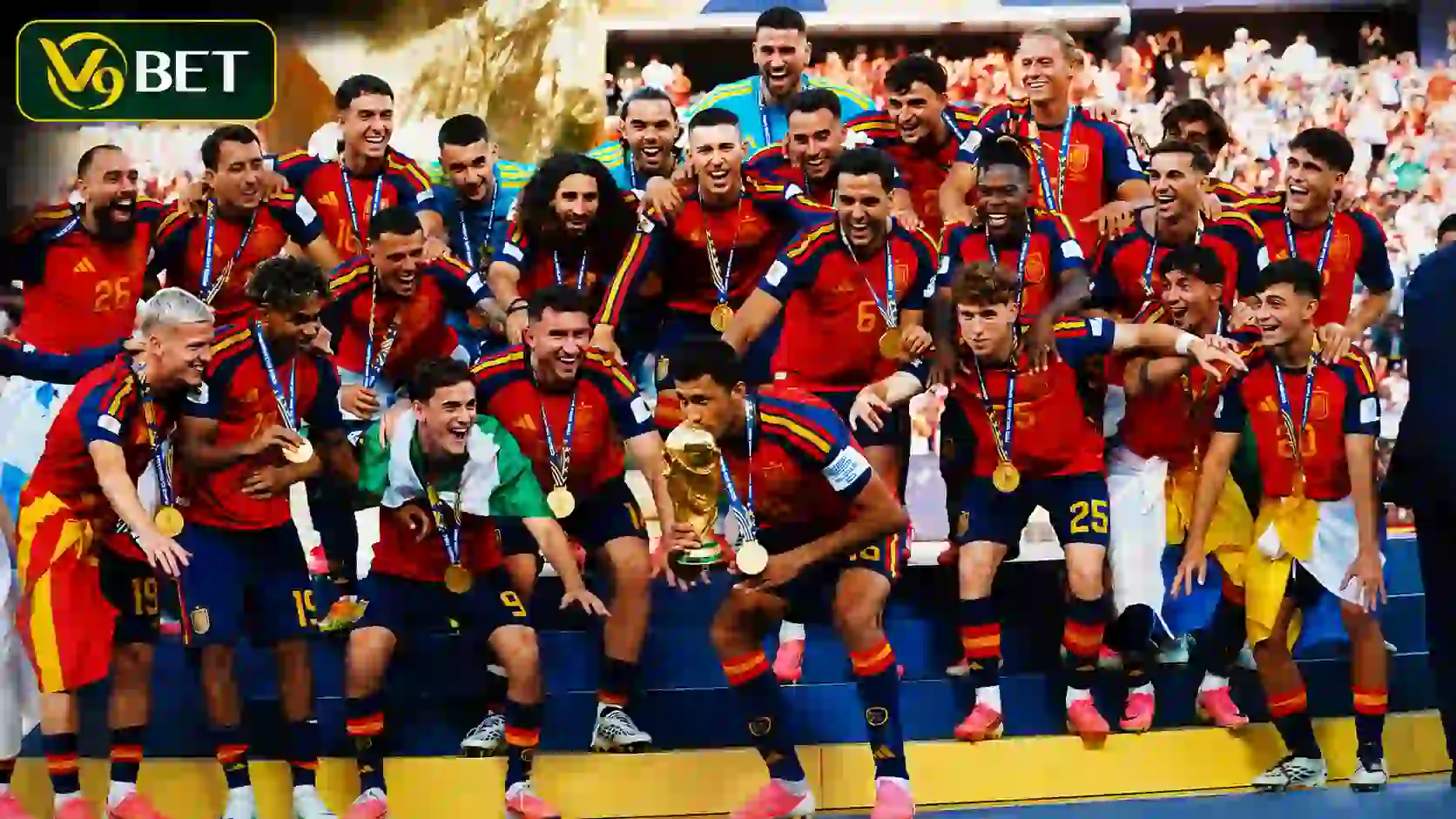
Spain won the 2026 World Cup in a well-deserved manner.
Spain’s Road to the 2026 World Cup Title and a Tournament Full of Turning Points
Spain's journey at the 2026 World Cup was significant not just because they reached the final, but because of the consistency of their playing style from start to finish. Spain did not change their approach under opposition pressure; they consistently used possession, movement, and passing as their primary tools to control matches.
When Spain had the ball, their midfielders constantly offered multiple passing options, defenders stepped up to help build play, and wide players stayed wide to stretch the opposition's defensive line. This approach allowed Spain to progress the ball through the first third without rushing. When gaps appeared, they would accelerate and attack with precision.
Equally impressive was their ability to adapt when games did not go according to plan. In some matches, opponents sat deep to block the central areas, so Spain switched to attacking through the flanks and using positional rotations. In games where they faced high pressing, their defenders and goalkeeper remained calm, building from the back rather than clearing the ball aimlessly.
This flexibility made Spain a difficult team to predict. Even when opponents knew Spain wanted to keep the ball, stopping their system proved challenging because the key was not one individual but the collective movement of the entire team. When one player was closed down, another was ready to take over immediately.
Defensively, Spain conceded very few goals throughout the tournament, reflecting their strong team structure. This wasn't just about the defenders or goalkeeper; it started with the forwards pressing after losing the ball, the midfielders slowing down opposition attacks, and the defence maintaining disciplined distances. Spain's defence was a collective effort rather than relying on individual brilliance.
For bettors on V9Bet, following these playing patterns opened up more markets than just picking the winner—such as Spain to have more possession, under total goals in matches they controlled, or live betting when the opposition began losing ground in midfield. Betting with real-time data and match context naturally leads to more reasoned decisions than relying on gut feeling alone.
From a Possession-Based Team to a Complete Champion
The common perception of Spanish football is often linked to short passing, prolonged possession, and using numerous midfielders to control space. However, the 2026 World Cup-winning Spanish side evolved beyond possession for the sake of it. They used the ball as a weapon to force opponents out of position before accelerating into the final third at the right moment.
The key difference was that this Spain side did not aimlessly pass the ball around. Every time a player received the ball, there was support movement both laterally and forward. Midfielders could carry the ball through pressure, while the attack featured players who stayed wide, cut inside, or dropped deep to receive between the lines, creating multiple attacking patterns in a single game.
Another factor was the familiarity between players. Many had come through club systems that emphasised possession and spatial awareness, so they understood each other's timing instinctively. When a midfielder turned, the forwards would start their runs; when a full-back pushed forward, another midfielder would drop to cover the position without needing sideline instructions.
This understanding allowed Spain to maintain their shape even when rotating positions during the game. Players could swap roles without disrupting the system's balance, meaning the team could commit numbers to attack while remaining ready to deal with opposition counter-attacks simultaneously.
Spain also showed clear mental strength. When the game entered high-pressure moments, they did not rush and lose their shape. They continued passing according to the system, chose the right moments to take risks, and did not let physical battles or opposition provocation distract them. Particularly in the final, when Argentina tried to use aggressive play and tactical fouls, Spain's players kept their composure and focused on executing their plan brilliantly.
The Final Between Spain and Argentina: A Game of Tactics, Patience, and Emotional Control
The final between Spain and Argentina was a match that clearly highlighted the contrast between two footballing philosophies. Spain aimed to control the game through possession and movement, while Argentina relied on physical strength, quick transitions, and the experience of their players in big matches. Both teams had periods where they could pressure their opponents, but neither opened up enough space to be easily punished.
Early on, Spain dominated possession, moving the ball from side to side to find gaps around the penalty area. But Argentina's defence held their positions well and intercepted passes before they could reach dangerous areas. At the same time, Argentina looked to exploit Spain's turnovers, seeking space behind the advanced full-backs.
The midfield battle was particularly intense. Every reception was met with physical contact and rapid pressure. Argentina tried to break Spain's rhythm using tackles and tactical fouls, but Spain's players remained calm, did not react emotionally, and stuck to their footballing principles.
As the game wore on, patience became the decisive factor. Spain did not force risky passes but chose to keep the ball and wait for Argentina's defence to lose its shape. Argentina, in turn, showed their experience in defending big games, making the 90 minutes a tactical battle rather than an open attacking exchange.
With no goals in normal time, the match went to extra time, where physical condition, concentration, and the quality of substitutes became crucial. Spain continued to hold possession and force Argentina to chase, while their opponents began to drop deeper to protect the result.
Ferran Torres's 106th-Minute Goal: The Decisive Moment
The 106th minute proved to be the historic moment for Spain when Ferran Torres, who had come on as a substitute, scored the winning goal to beat Argentina 1-0 and secure their second World Cup title. This goal was no accident; it resulted from Spain's continued belief in their system, even after over 100 minutes of play.
Before the goal, Spain still moved the ball calmly. They tried to pull Argentina's players out of their defensive line before playing the ball into the space created. Ferran's movement was crucial—he did not wait for the ball statically but attacked the space behind the defence at the precise moment when the opponents' concentration and physical levels were waning.
The quality of the substitutes was another factor that gave Spain the edge in the decisive moments. The players brought on did not just add fresh legs but could change the attacking dynamic and make a real difference. Ferran used his experience, pace, and finishing ability to slot the ball past the goalkeeper, creating a moment that Spanish fans will remember for a long time.
After taking the lead, Spain did not let the emotion of the game disrupt their discipline. They maintained their positions, controlled the central areas, and kept possession when possible rather than retreating deep. This decision reduced Argentina's chances of building sustained pressure and allowed Spain to hold on to their 1-0 lead until the final whistle.
The moments after the winning goal also highlighted the difference in emotional control. Even as Argentina pushed forward with increased intensity, Spain did not panic. The players communicated, cleared the ball when necessary, and defended tightly without giving away fouls in dangerous areas.
From a betting perspective, the extra-time goal demonstrated how live betting can change at any moment. V9Bet users following the match might have noticed Spain still had energy from their substitutes and continued to control possession, opening up options in markets like next team to score, result after extra time, or goalscorer markets. These varied options allow fans to use real analysis to inform their decisions, adding excitement to the big game right until the final whistle.
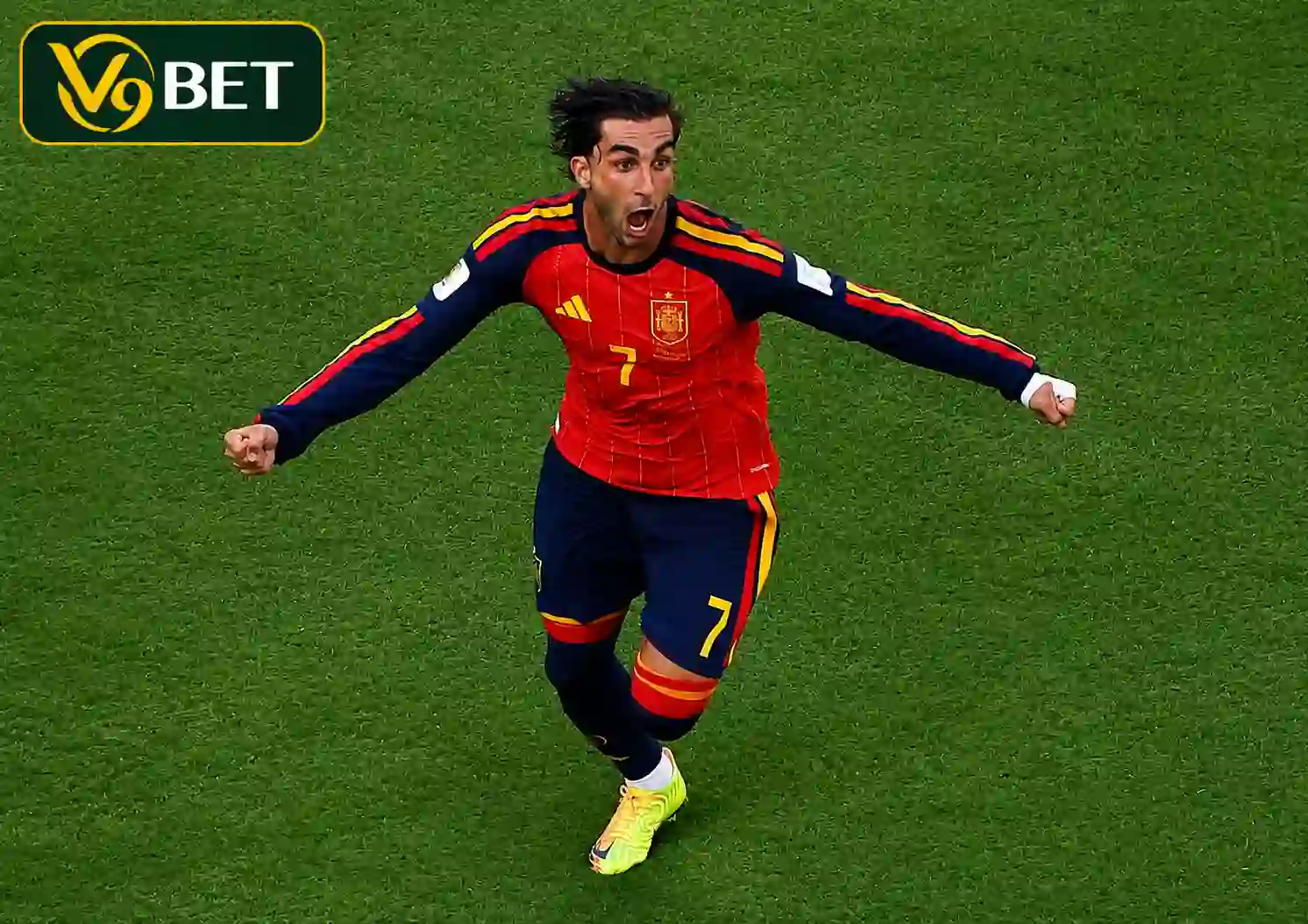
Ferran Torres scored the winning goal for Spain in the 106th minute
Why Spain Were the Most Worthy Champions of the 2026 World Cup
Every World Cup produces several teams with excellent campaigns, but looking at the entire tournament objectively, Spain were clearly the side that maintained the highest standard of play from the group stage to the final. They hardly had a match where they lost their shape or were forced into playing an uncomfortable style. This reflects the strength of their system rather than relying on the individual brilliance of a few players.
The first key strength was excellent possession play. Spain did not keep possession just for a high percentage figure. Every pass had a purpose—to pull defenders out of position, create space, and gradually turn defence into attack efficiently. Every player understood when to move, where to receive the ball, and who to pass to, making Spain's game fluid throughout the tournament.
Another major factor was the quality of their midfield, widely considered the best at this World Cup. Whether it was linking play, changing the tempo, or winning the ball back, Spain's midfielders controlled the key areas of the pitch so effectively that many opponents barely had a chance to play their own game.
Defence was another area where Spain stood out from many teams. They conceded among the fewest goals in the tournament, and in several matches, they barely gave opponents a clear sight of goal. This strength did not come from the defenders alone but from collective defensive work across the entire team—from the forwards pressing, the midfielders closing down spaces, to the well-organised defensive line.
Furthermore, Spain demonstrated exceptional emotional discipline, particularly in the final, where Argentina used physical play and tactical fouls. Spain's players did not lose focus, did not react recklessly or pick up unnecessary cards, but stayed true to their game plan to eventually secure the victory.
Another factor often overlooked is squad continuity. Many of this Spanish squad had played together since youth level, and several were club teammates, giving them a deep understanding of each other's game. This familiarity reduced communication errors and made their passing smoother than many teams with players from various leagues and styles.
Read more: Top 10 Young Stars Who Broke Out at the 2026 World Cup Fans Should Watch
The Champions' Midfield: The Art of Possession and Distribution
If you had to choose the most crucial component of this Spanish team, the answer would undoubtedly be the "midfield." This was the area where Spain dominated nearly every opponent. The midfielders were not just passers but the ones dictating the tempo—deciding when to play fast, when to slow down, and when to keep possession to maintain an advantage.
Triangular movement, finding space, and one-touch passing allowed Spain to rarely lose the ball in dangerous areas. Every player understood their role clearly and constantly moved to offer passing options, forcing opponents to chase the ball and expend energy continuously.
The midfield leader, Rodri, perfectly embodied this philosophy. He was not a flashy player, but he controlled the game's rhythm, read situations, and made the right passes almost every time. His consistency in both attack and defence earned him the Golden Ball as the tournament's best player.
With such a strong midfield, Spain could play the style they wanted. Whether facing a deep-lying defence or a high-pressing team, they maintained their quality in possession—a key reason they were superior throughout the tournament.
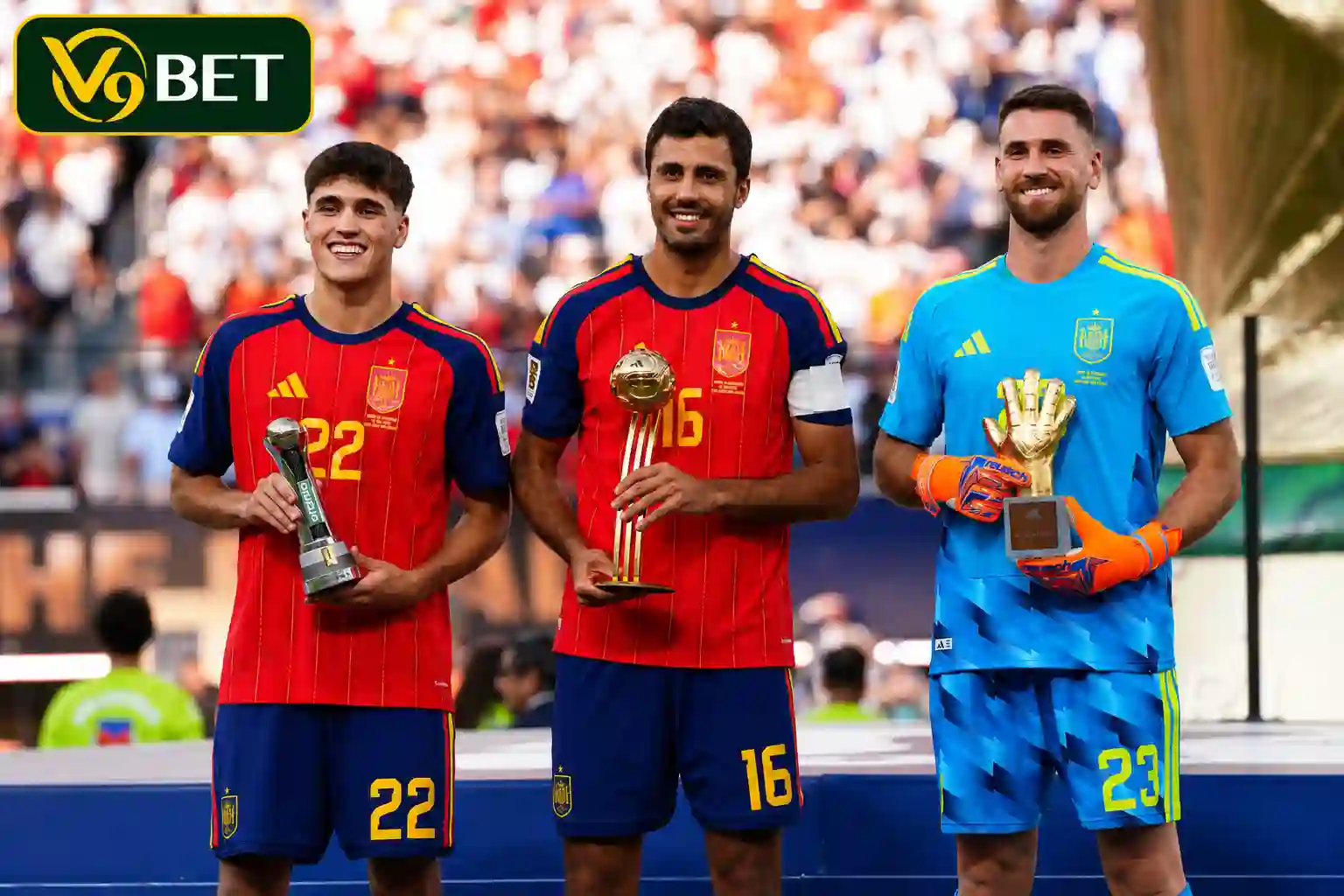
Three Spanish footballers won individual awards at the 2026 World Cup.
Individual Awards That Underlined Spain's Squad Supremacy
Spain's success at the 2026 World Cup was not just reflected in the trophy but also confirmed by several individual awards, highlighting that their players excelled in every position on the pitch.
The first award was the Golden Ball, won by Rodri, after an outstanding tournament controlling the midfield. He was the central figure in passing, changing the tempo, and breaking up opposition play, earning him recognition as the most influential midfielder of the tournament.
For the future of football, the Best Young Player award went to Pau Cubarsí, a 19-year-old defender who played with maturity beyond his years, reading the game accurately, positioning well, and showing virtually no errors in big games. Winning this award reflected that Spain not only have world-class players now but also a very strong talent base for the future.
The Best Goalkeeper award went to Unai Simón, who played a crucial role in Spain's title win with several key saves and was the backbone of one of the tournament's meanest defences. His composure in playing out from the back and communication with the defence made Spain's rearguard effective throughout the tournament.
With all three major individual awards going to Spanish players, it reinforced that the team's success was not down to luck or a fleeting moment but was the result of quality in every position and a system that allowed each player to maximise their potential.
Conclusion
The 2026 World Cup will be remembered as the tournament where Spain returned to the pinnacle of world football with a beautiful and effective style. They defeated Argentina 1-0 in extra time through Ferran Torres's 106th-minute goal, proving that excellent possession, world-class midfield, solid defence, and emotional discipline are the true hallmarks of a champion team.
The awards for Rodri, Pau Cubarsí, and Unai Simón further reinforced that Spain's success was not down to any one individual but was the result of the entire team's quality and a strong football system, making them worthy world champions without question.
If you don't want to miss the excitement of future major tournaments, whether it's the World Cup, Euros, Champions League, or top leagues worldwide, V9Bet offers a comprehensive football betting experience with a wide variety of markets, both pre-match and in-play, real-time odds updates, an easy-to-use interface compatible with all devices, plus promotions for new members and special events throughout the year. This ensures every match you watch is filled with excitement, and every analysis you make has the chance to turn into a winning bet.